⚡ Quick exit button closes this tab immediately. Remember to clear your browser history after visiting. Browsing safely? Read this first →
Kabalikat ni Mila

You are not alone.
You never were.

This is a space for every woman who suspects something is wrong, who knows something is wrong, who is trying to leave, who has left and is still carrying it. Whatever stage you are at — there is something here for you.

Mila Pulido lived through exactly what you may be living through now. She didn't make it out. She dreamed of building a place like this for women like you. We finished what she started.

Read Mila's full story →
If you only read one thing → What I Wish I Knew Before I Lost Mila

Worried about someone you love? Go to Kabalikat →

If You Need Help Now

Get Help Now

These agencies provide direct support. You do not need to explain your whole story. Just tell them you need help.

Emergency

911

National Emergency Hotline — handles VAWC calls

PNP Women and Children Protection Center (WCPC)

Police assistance and investigation for VAWC cases — Philippines

Landline: (02) 8532-6690 / (02) 7410-3213

Aleng Pulis mobile: 0919-777-7377

Email: avawcd.wcpc@pnp.gov.ph

Website: wcpc.pnp.gov.ph

Department of Social Welfare and Development (DSWD)

Psychosocial support, shelter, and crisis intervention — Philippines

Text Hotline: 0918-912-2813

Trunkline: (02) 8931-8101 to 07

Ugnayan Pag-asa Crisis Intervention Center: (02) 8734-8639

IACVAWC Secretariat (PCW)

Referral, coordination, and VAWC policy guidance — Philippines

For VAW concerns specifically

Landline: (02) 8733-6611

Trunkline: (02) 8735-1654 local 123-124

Mobile: 0917-867-1907 / 0945-455-8121

Email: iacvawc@pcw.gov.ph

Website: iacvawc.gov.ph

Barangay VAWC Desk

First point of contact for protection orders — Philippines

Go to your nearest Barangay Hall and ask for the VAWC Desk.

Human Support

Lunas Collective

A volunteer-powered chat helpline for Filipino women — Philippines

Monday–Saturday, 1–7pm (GMT+8). Free. Confidential.

Website: lunascollective.org

Reach them on Facebook →

If a number does not connect, call 911 or visit your nearest DSWD office.

Where are you right now?

Every woman's path is different. These stages are not a ladder — you may move between them, return to earlier ones, or be in more than one at once. Start where you are.

All articles

Browse everything, or click a stage above to filter. Articles marked with ⚠ are coming soon — we link you to trusted resources in the meantime.

All Stages · Start Here

What I Wish I Knew Before I Lost Mila

If you only read one article from this site, read this. Nine things — written by Joni, the founder of Kabalikat ni Mila — that might have changed everything.

Read article →
Stage 0 Before everything happens
Stage 0–2 · Early Relationships

Love Bombing

When intensity feels like love — and why it's often the first warning sign.

Read article →
Stage 0 · Warning Signs

Red Flags and Warning Signs

What to watch for before it becomes impossible to see.

Read article →
Stage 0–1 · Types of Abuse

Types of Abuse: It Is Not Always Physical

Naming what is happening when there are no bruises.

Read article →
All Stages · Healthy Relationships

What a Healthy Relationship Looks Like

The Equality Wheel and the relationship you deserve.

Read article →
Stage 1 Something is off. Is this abuse?
READ THIS FIRST
All Stages · Digital Safety

Digital Safety: Protecting Yourself Online

If someone may be monitoring your device — read this before anything else.

Read article →
Stage 0–1 · Naming It

The Silence That Echoes

Naming what you feel when you can't find the words.

Read article →
Stage 1–2 · Generational Patterns

You Are Not Alone

On generational patterns and breaking the cycle.

Read article →
Stage 0–2 · Coercive Control

Coercive Control: The Abuse You Can't Photograph

What it is, how it works, and why it's so hard to see from inside it.

Read article →
Stage 1 · Gaslighting

Gaslighting: When Your Reality Is Rewritten

What it is, how it works, and why it's so hard to name.

Read article →
Stage 1 · The Cycle

The Cycle of Abuse

Understanding the pattern that keeps you hoping — and why the good times aren't evidence of change.

Read article →
Stage 1–2 · Practical Tool

One Tap a Day: How to See the Pattern

A three-second daily practice that shows you what your memory keeps rewriting.

Read article →
Stage 1 · Space for Action

Your World Should Not Be Getting Smaller

Understanding the ten areas of your life that coercive control quietly narrows.

Read article →
Stage 1 · Small Steps

Your World Should Not Be Getting Smaller: Small Steps

Ready to take small steps? Practical actions across all ten domains of your life.

Read article →
Stage 1 · External Resource · Chayn · Psychosocial · International

Telling Someone What Happened

Chayn's guide to sharing your experience — what to expect emotionally, how to choose who to tell, and how to protect yourself in the process.

Read on Chayn →
Stage 1 · Human Support · Lunas Collective · Psychosocial · Philippines

If what you are reading feels familiar — and you want to talk to someone who understands.

Lunas Collective is a volunteer-powered chat helpline for Filipino women. Monday–Saturday, 1–7pm (GMT+8). Free. Confidential.

Visit lunascollective.org → Reach them on Facebook →
Stage 2 I know what's happening. Do I stay or go?
Stage 2 · Why Women Stay

Why Do Women Stay? The Real Answers

Not the judgements. The real, documented reasons — fear, love, money, faith, the children.

Read article →
Stage 2 · Hope and Change

Will He Change? Understanding the Cycle of Hope

What the research actually says about genuine change — and the difference between hope and evidence.

Read article →
Stage 2 · Traumatic Bonding

Traumatic Bonding: Why Leaving Feels Impossible

Why you miss him even when you know what he is. This article is under professional review — trusted resources while you wait:

The Hotline — Trauma bonds explained clearly → Psychosocial · Information · International (US-based) HelpGuide — What it does to you and how healing happens → Information · International
Stage 3 I decided to leave. How do I do it safely?
Stage 3 · While Deciding

How to Maintain Sanity While Deciding

You don't have to have an answer yet. You just have to get through today.

Read article →
Stage 3 · Digital Safety

Digital Safety: Protecting Yourself Online

Quiet, practical steps you can take today to browse, plan, and reach out safely.

Read article →
Stage 3 · Safety Planning

Safety Planning: How to Prepare to Leave Safely

A safety plan is not a commitment to leave. It is just being prepared. Written for the Philippines.

Read article →
Stage 3 · Legal Rights · Philippines

Legal Rights: Know Your Rights

RA 9262, protection orders, the VAWC desk — you have legal rights. This article is under professional review — trusted resources while you wait:

PCW — Your rights under Philippine law, plain language → Legal · Information · Philippines Chayn — How to build your case without a lawyer → Legal · Information · International
Stage 4 I am free. Why do I still feel so bad?
Stage 4 · Just Left

When You've Just Left: What to Expect

The grief, the pull back, the fog. Why it doesn't feel the way you expected it to feel.

Read article →
Stage 2–3 · When There Are Children

When There Are Children: What to Consider

Leaving when you have children is more complicated, and you deserve information that reflects that. This article is under professional review — trusted resources while you wait:

WomensLaw — Safety planning with children specifically → Legal · Information · International (US-based) Chayn Good Friend Guide — for someone supporting you through this → Information · Psychosocial · International
Stage 5 I am healing. I am rebuilding my life.
Stage 5 · Recovery

What Leaving Does to Your Body and Mind

PTSD, hypervigilance, the nervous system still scanning for threat. Why you don't feel how you expected to feel.

Read article →
Stage 5 · Your Voice

Your Story Is Not Over

Why sharing it helps you — and the woman who is still in the middle of it. When you're ready. On your terms.

Read article →
For Mothers · Breaking the Cycle

A Letter to Mothers

For the mother who stayed, the mother who left, and the mother who is still deciding.

Read article →
For Deeper Healing · Psychosocial · International
Bloom by Chayn

Bloom is a free, trauma-informed healing platform built specifically for survivors of domestic abuse and gender-based violence. Self-paced courses, guided healing, in your own time.

Visit Bloom by Chayn →
For Human Connection · Psychosocial · Philippines
Lunas Collective

A volunteer-powered chat helpline for Filipino women. When you need a human voice — someone who understands. Monday–Saturday, 1–7pm (GMT+8).

Visit Lunas Collective → Reach them on Facebook →
Information · Philippines
PCW Digital Library

Philippine Commission on Women

Filipino and English resources on gender equality, women's rights, RA 9262, and related laws.

Visit PCW Digital Library →
Stage 6 I am ready to support the woman I was.

Your experience is not just something you survived. It is something you can offer. However you are ready — a story shared, a friend supported, a hand extended — this stage is for the woman who wants to reach back.

Articles for this stage are being written. In the meantime — if you have a story and are ready to share it, the Resilience Wall is yours.
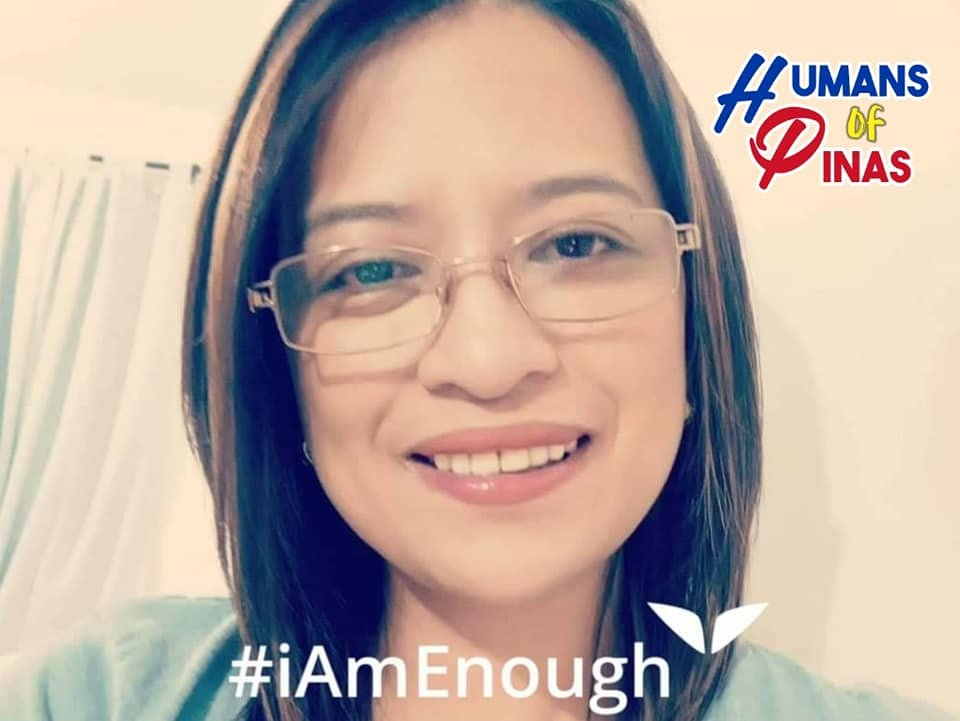
This is who we built this for.

Mila Pulido lived with abuse for 22 years. She tried to leave. She was killed on October 29, 2018. Her body was found posed to look like a suicide. The autopsy told a different story.

She was the kindest person you will meet. She thought of everyone else's needs before her own. She loved her family unconditionally. She had a signature guffaw when she laughed. She would randomly pull her brothers or cousins and command "Sayaw tayo" — let's dance — like it was their prom. She sang with so much gusto. She sings out of tune and she doesn't have rhythm. It didn't matter.

She had four sons. She had a family who loved her. She had a life that was supposed to go differently. She endured 22 years of abuse because she loved her children, because she feared what would happen if she left, because she had been told — as so many women are told — that a family stays together.

We are her family. We built this because she deserved better, and because every woman still inside what Mila could not escape deserves a way out.

Read Mila's full story →
Bakit Kabalikat ni Mila?Why Kabalikat ni Mila?

Balikat is the Tagalog word for shoulder.

Kabalikat means someone you stand shoulder to shoulder with — united in a common goal. Not behind you. Not ahead of you. Beside you.

Mila is Milagros Pulido. Milagros means miracle.

After 22 years of abuse, Mila left her husband. She regained her voice. She found her purpose. She dreamt of creating advocacy so other women would not have to suffer through decades of abuse the way she did.

On October 29, 2018, Mila was killed by domestic violence. She never got to build what she dreamed of.

Kabalikat ni Mila is her dream, built by her family. We stand shoulder to shoulder — kabalikat — with every woman still inside what Mila could not escape.

What Kabalikat ni Mila is — and what it is not.

What this site is

Information, at any hour, free, anonymous, no registration. A place to understand what is happening, find words for it, and think through what comes next.

What this site is not

It is not a hotline, not a shelter, not legal representation. It does not replace human help. It is a starting point — so you know what exists, what your rights are, and where to go next.

Kabalikat ni Mila is officially hosted at knmila.org. This is the only active platform.

If you need more right now

911 — National Emergency Hotline
Handles VAWC calls
PNP Women and Children Protection Center (WCPC)
Police assistance and investigation for VAWC cases — Philippines
Landline: (02) 8532-6690 / (02) 7410-3213
Aleng Pulis mobile: 0919-777-7377
Email: avawcd.wcpc@pnp.gov.ph
Website: wcpc.pnp.gov.ph
Department of Social Welfare and Development (DSWD)
Psychosocial support, shelter, and crisis intervention — Philippines
Text Hotline: 0918-912-2813
Trunkline: (02) 8931-8101 to 07
Ugnayan Pag-asa Crisis Intervention Center: (02) 8734-8639
IACVAWC Secretariat (PCW) — for VAW concerns specifically
Referral, coordination, and VAWC policy guidance — Philippines
Landline: (02) 8733-6611
Trunkline: (02) 8735-1654 local 123-124
Mobile: 0917-867-1907 / 0945-455-8121
Email: iacvawc@pcw.gov.ph
Website: iacvawc.gov.ph
Barangay VAWC Desk
First point of contact for protection orders — Philippines
Go to your nearest Barangay Hall and ask for the VAWC Desk.
Lunas Collective — a human voice
A volunteer-powered chat helpline for Filipino women. Monday–Saturday, 1–7pm (GMT+8). Free. Confidential.
lunascollective.org · Facebook →

If a number does not connect, call 911 or visit your nearest DSWD office.

If you love someone who might be in this situation

You can see what she can't — or won't — see. You don't know what to do. This is for you.

Helping Without Making It Worse

What pushes her away, what actually helps, what to say — and how to understand the ten areas of her life where her freedom has been narrowed.

Read the guide →

Helping Without Making It Worse: Small Steps

Practical companion to the guide above. Small, actionable steps across each of the ten domains — pick one domain, one action. That is enough for today.

Read the guide →
External Resource · Chayn · Information · International

How to Be a Good Friend

Chayn's Good Friend Guide — short, honest, practical. Written for the friend or family member who wants to help without making it worse. Opens in a new tab.

Read the guide →
Practical tools you can print or fill digitally

Private documents for your own use — to record, prepare, protect, and heal.

Stage 1–3 · Evidence

Recording What Happens to Me

A private, dated journal for recording incidents. Admissible as personal evidence in Philippine courts. Keep it safely — guidance inside.

Open template →
All Stages · Safety

Digital Security Checklist

Quiet, practical steps to protect your digital life — browsing, phone, messaging, shared accounts. Use what applies, leave the rest.

Open checklist →
Stage 3 · Leaving

The First 72 Hours

What to do and what to bring when you have decided to go. If you are leaving today — right now — this is for you.

Open guide →
Stage 5 · Healing

Journal: Healing

A private space to track your recovery, one day at a time. Five parts: where you are, weekly check-in, reclaiming yourself, what you're building, evidence of progress.

Open journal →
Questions women ask — answered honestly.

These are the questions women search for at 2am. Sourced from real conversations. Answered without judgement.

Is This Abuse?

Yes.

Physical violence is one form of abuse. It is not the only one, and it is not always the first one. Many women spend years in relationships where they are controlled, belittled, isolated, monitored, or threatened — and never hit. That does not make what is happening to them less serious.

If he decides what you wear, who you can talk to, or where you can go — that is control. If he calls you stupid, worthless, or crazy until you start to believe it — that is abuse. If he controls the money so you cannot leave — that is abuse. If you find yourself measuring your words and adjusting your behaviour so you do not set him off — that is abuse.

The absence of a bruise does not mean the absence of harm.

It can start with something as small as how she cooks eggs. That is how it started with Mila — he criticised the way she cooked his egg.

Read more: Types of Abuse →

This is one of the most disorienting parts of being in an abusive relationship. Abusive men are often genuinely charming, generous, and well-loved in public. The man everyone sees at family gatherings is not a lie — it is one side of him. But it is not the whole person.

What happens behind closed doors is also true.

The fact that he is capable of being kind makes it harder to name what he does to you. It makes you doubt yourself. It makes others doubt you. It is also, as Lundy Bancroft writes, part of how abuse works — the good times are real enough to keep you hoping, and the contrast keeps you off balance.

You are not imagining it. Both things can be true: he can be loved by others, and still be harmful to you.

Will He Change?

Some do. Most do not. The research is clear on what genuine change looks like, and it is not what most abusive men offer.

Genuine change is not: apologising after an incident. Crying. Promising it will never happen again. Going to a few therapy sessions. Being kind for several weeks.

Genuine change is: acknowledging specifically what he has done, without minimising or blaming you. Taking full responsibility over a sustained period — not when he is trying to win you back, but consistently. Changing his behaviour with everyone, not just when he thinks you are watching. Giving you the freedom to leave without pressure or consequences.

Lundy Bancroft, who has worked with abusive men for decades, is direct: an abusive man who is genuinely changing does not ask you to wait for him. He does not make his change your responsibility. And he accepts your decision, whatever it is.

His words are not evidence of change. His consistent behaviour over time is.

I left because I read these words in a book — abusers seldom change. If you still hear him tell you it is your fault, there is no desire for him to change.

Read more: Will He Change? →

This is one of the most painful parts of the cycle — because the good period is real. He is the person you fell in love with. Things feel possible again. You start to wonder if you were overreacting.

What you are experiencing has a name. It is part of a pattern that Lenore Walker documented in 1979: tension builds, there is an incident, he is remorseful and kind, things seem good — and then the tension begins again. The length of the good period varies. It can last days, weeks, even months. But without genuine change — not just good behaviour, but a fundamental shift in how he sees his right to control you — the pattern returns.

The question is not whether he is capable of being good. The question is whether the pattern has actually ended. Time will tell. You do not have to decide anything right now. But you deserve to understand what you are seeing.

Read more: The Cycle of Abuse →

Why Can't I Leave?

Loving someone is not a reason to stay in a relationship that is hurting you. It is what happens when you have shared your life, your home, your hopes with another person — even one who has harmed you.

Love and harm can exist in the same relationship. But love is not the only thing that keeps women in abusive relationships. There is also fear. Financial dependence. Children. Family pressure. Shame. The belief that leaving will make things worse. The hope that things will get better. These are real, and they deserve to be named honestly.

Staying because you love him is your choice to make. But if you are staying because you are afraid of what happens if you leave — that fear is information worth paying attention to.

Read more: Why Do Women Stay? →

When a relationship alternates between harm and genuine warmth, between fear and relief, between cruelty and kindness — the bond that forms is one of the strongest psychological attachments we know. Researchers call it traumatic bonding. It is not a sign that you love him too much. It is a predictable response to an unpredictable environment.

Your nervous system has learned to associate him with relief — the relief that comes when the tension breaks, when he is kind again, when things feel safe. That association does not dissolve just because you understand intellectually that the relationship is harmful. It takes time. It takes support. It takes patience with yourself.

Going back is part of the pattern for many women. What matters is that you keep the door open — to information, to support, to yourself.

The Guilt

Yes. And it is one of the cruelest parts of what abuse does to you.

Abusive relationships are designed — not always consciously, but effectively — to make you feel responsible for his wellbeing, his behaviour, and the survival of the relationship. You have likely spent years managing his moods, absorbing his blame, and putting his needs before your own. Thinking about leaving can feel like abandonment. Like betrayal. Like you are the one causing harm.

You are not.

Feeling guilty does not mean leaving is wrong. It means the relationship has been very effective at making you responsible for everything — including his choices.

Your life matters. Your safety matters. Thinking about leaving is the beginning of taking care of yourself.

Because you care. And because the system — family, community, sometimes the police themselves — often responds in ways that make you feel like you have done something wrong.

You reported the truth. That took more courage than most people will ever understand. And it is common — deeply common — to feel guilt, grief, and doubt afterward. To wonder if you did the right thing. To feel responsible for the consequences he now faces.

He made the choices that brought him here. Not you.

Reporting abuse is an act of protection — for yourself, for your children if you have them, and sometimes for future women he would have harmed. The guilt you feel is real. It is also not a verdict on whether you did the right thing.

If you filed a VAWC case or protection order and need to understand what comes next, a VAWC desk officer or legal aid lawyer can walk you through the process. You do not have to navigate it alone.

What Happens When I Leave?

You start with information. You do not have to have everything figured out. You do not have to be ready. You just have to start learning what is possible.

The most important thing to know: leaving an abusive relationship is most dangerous in the period immediately before and after you go. This is not to frighten you — it is to help you plan. A safety plan is simply thinking through the steps before you need them, so that when you are ready, you are not starting from zero.

Some starting points: know where important documents are — your ID, birth certificate, your children's documents — and whether you can access them or copies of them. Know who you can call. Know where you can go, even temporarily. Start putting small amounts of money aside if you can, somewhere he cannot access. Do not tell him you are planning to leave before you are ready.

Read our Safety Planning article — written for the Philippines →

Go to Templates →

You can file at your barangay VAWC desk, or at the nearest police station with a Women and Children Protection Desk.

You do not need his consent to file. You do not need his signature on a protection order. Anyone who tells you otherwise is wrong.

The Barangay Protection Order can be issued on the same day or within 24 hours.

Does It Get Better?

Because leaving ends the danger. It does not immediately end the pain.

After years of being in survival mode — managing his moods, bracing for the next incident, hoping for the good version of him — your nervous system does not simply reset when you walk out the door. The grief is real. The loneliness is real. The disorientation of no longer having to live around another person's volatility — and not knowing who you are without it — is real.

Many women describe the period after leaving as some of the hardest of their lives, even harder than living through the abuse. That is not a sign you made the wrong choice. It is a sign that what you survived was serious, and that healing takes time.

You are not starting over. You are starting forward. Those are not the same thing.

Read more: When You've Just Left →

Yes.

Not a smaller life. Not a life defined by what you survived. A real one — with love, with safety, with joy that does not have to be earned or protected from someone else's moods.

I know this because I lived it. I know this because Rosana, who helped build this site, lived it too. We are not exceptions. We are what is possible.

The woman you were before the relationship — or the woman you never got to become because the relationship started before you had the chance — she is not gone. She has been waiting.

You deserve to meet her.

Kabalikat ni Mila is a free, anonymous resource. Nothing you read here is stored or tracked. If you are in immediate danger, please call emergency services or go to your nearest barangay.

Stories from women who have been here.

This wall was built because Mila never got to tell her story on her own terms. Every story here is the one she deserved to share. Add yours.

Story 1

Billow VG

Midwest USA  ·  Survivor

"To DV victims and survivors: WE ARE STRONGER THAN WE THINK."

Read her story →

Story 2

CC

Philippines  ·  Survivor

"I am not perfectly healed. But hey, I am trying. Trying is always a good start."

Read her story →

Your story belongs here too.

Share as much or as little as you want — anonymously, or with your name. We review every submission before anything is published. Your safety and privacy come first.

All submissions are reviewed by our team before anything is published. Your safety and privacy come first.

Thank you for trusting us with your story. We will read it carefully.
Your story could not be sent — please check your internet connection and try again. If this keeps happening, you can reach us at contact@knmila.org.
Contact Kabalikat ni Mila

Kabalikat ni Mila is an information and referral resource only. It is not a substitute for professional legal or clinical advice. If you are in immediate danger, please contact the agencies below.

If You Need Help Now

Get Help Now

These agencies provide direct support. You do not need to explain your whole story. Just tell them you need help.

Emergency

911

National Emergency Hotline — handles VAWC calls

PNP Women and Children Protection Center (WCPC)

Police assistance and investigation for VAWC cases — Philippines

Landline: (02) 8532-6690 / (02) 7410-3213

Aleng Pulis mobile: 0919-777-7377

Email: avawcd.wcpc@pnp.gov.ph

Website: wcpc.pnp.gov.ph

Department of Social Welfare and Development (DSWD)

Psychosocial support, shelter, and crisis intervention — Philippines

Text Hotline: 0918-912-2813

Trunkline: (02) 8931-8101 to 07

Ugnayan Pag-asa Crisis Intervention Center: (02) 8734-8639

IACVAWC Secretariat (PCW)

Referral, coordination, and VAWC policy guidance — Philippines

For VAW concerns specifically

Landline: (02) 8733-6611

Trunkline: (02) 8735-1654 local 123-124

Mobile: 0917-867-1907 / 0945-455-8121

Email: iacvawc@pcw.gov.ph

Website: iacvawc.gov.ph

Barangay VAWC Desk

First point of contact for protection orders — Philippines

Go to your nearest Barangay Hall and ask for the VAWC Desk.

Human Support

Lunas Collective

A volunteer-powered chat helpline for Filipino women — Philippines

Monday–Saturday, 1–7pm (GMT+8). Free. Confidential.

Website: lunascollective.org

Reach them on Facebook →

If a number does not connect, call 911 or visit your nearest DSWD office.

We read every message.

Whether you have a question, want to collaborate, or simply want to tell us something — we are here. Response times may vary but no message goes unread.

Kabalikat ni Mila is a volunteer-led organisation focused on women navigating abuse in the Philippines and the Filipino diaspora.

We are always building. If there is an article you wish existed, a resource we should know about, or something that did not feel right in the way we said it — tell us. Your experience makes this site better for the next woman who finds it.

Need a human voice?
Lunas Collective — a volunteer-powered chat helpline for Filipino women. Monday–Saturday, 1–7pm (GMT+8). Facebook →
Message sent. We'll read it carefully.
Your message could not be sent — please check your internet connection and try again. If this keeps happening, you can reach us at contact@knmila.org.
⚡ Quick exit button closes this tab immediately. Remember to clear your browser history after visiting. Browsing safely? Read this first →